Table of contents
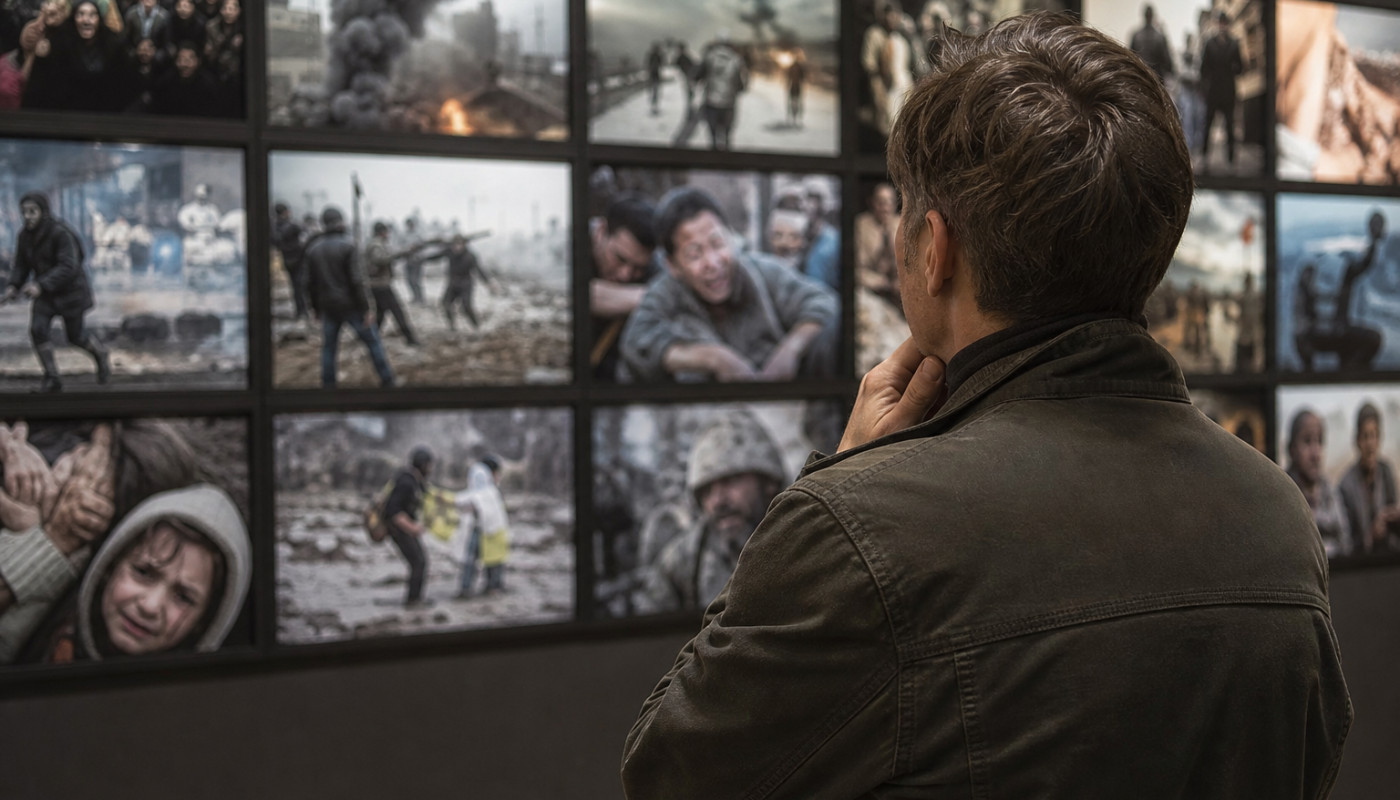
In newsrooms from New York to Nairobi, image editors are confronting a new reality: photorealistic pictures can be generated in seconds, at negligible cost, and with no camera ever leaving a bag. The shift is no longer theoretical, as major platforms now flood social feeds with synthetic “breaking news” visuals, and elections, conflicts, and disasters increasingly arrive wrapped in pixels that look convincingly true. For photojournalism, the question is not whether AI will be used, but whether the public will still believe what it sees.
When any image can look “real”
How do you verify a photograph that was never taken? The most unsettling change brought by text-to-image systems is not aesthetic, it is epistemic: they produce images that mimic documentary cues, including harsh flash, motion blur, low-light noise, shallow depth of field, and even the imperfect framing associated with hurried reporting. As these models learn from immense datasets of real photographs, they become better at replicating the visual grammar audiences have been trained to trust, the grain of a night scene, the compression artifacts of a phone upload, the messy background clutter that signals authenticity.
This is why synthetic images are now routinely used to deceive, not only in fringe corners of the internet but in high-velocity information environments where speed beats scrutiny. Researchers and verification teams have documented repeated waves of AI-generated content around major events, from natural disasters to armed conflicts, because the incentives align: a convincing image drives clicks, outrages, donations, and political reactions faster than text ever could. The consequence is a credibility tax paid by everyone, including legitimate photojournalists who find themselves asked to “prove” their work in ways earlier generations did not, and newsrooms that must invest more time and expertise just to reach the same level of confidence they once got by default.
Even when AI is not used maliciously, it can still distort reality. Synthetic visuals created to “illustrate” a story may smuggle in misleading details, a uniform that resembles a specific army, a skyline that suggests a particular city, a facial expression that implies guilt or fear. These are not trivial embellishments; in journalism, context is content, and the wrong context changes the meaning. In crisis coverage, the risk grows sharper, because audiences are primed to share first and reflect later, and the more emotionally charged the moment, the more likely a plausible image will be treated as proof.
Newsrooms tighten rules, but struggle to police
Can a code of ethics keep up with a generator? Many major media organisations have moved to clarify what is and is not acceptable, typically drawing a bright line between editorial photography, where authenticity is paramount, and illustration, where some degree of construction has long been tolerated. Yet the practical challenge sits in the middle: mixed workflows, freelancers across borders, partnerships with wire services, and audience contributions, all feeding into a publishing machine that runs on deadlines. The idea that a single editor can reliably spot every synthetic image, every time, is increasingly unrealistic.
What is changing inside newsrooms is less a single rule than an entire chain of custody. Verification now often requires triangulation: contacting the photographer, requesting raw files, checking metadata, comparing shadows and weather with known conditions, matching landmarks to satellite imagery, and searching for earlier appearances of the same image online. These practices existed before AI, but they were applied selectively, typically to high-stakes investigations. Now they are creeping into daily news production, creating friction in a business that already runs lean.
At the same time, the standards for permissible editing, historically debated around cropping, toning, and minor corrections, face fresh pressure. Generative “fill” tools can remove a distracting object, extend a background, or add light in a way that looks like conventional retouching, while effectively altering the factual record. In a breaking-news image, removing a bystander, changing a sign, or smoothing smoke can change what the scene testifies to. For editors, the challenge becomes not only catching fakes from outside, but also preventing well-intentioned staff from crossing a line with tools that now come built into everyday software.
There is also an accountability problem. When a photo is questioned, audiences want a clear answer quickly, but the verification process is slow, technical, and often cannot be fully disclosed without exposing sources or methods. The result is a communication gap that misinformation exploits, because the denial is always less vivid than the fake, and the explanation rarely travels as far as the original image.
Proof shifts from pixels to provenance
What if the future of trust is paperwork? As AI erodes confidence in the image itself, credibility increasingly hinges on provenance, the documented history of how an image was captured, stored, edited, and published. That means not only asking “does this look real?” but “can we trace it back to a camera, a time, a place, and a responsible author?” In practice, that pushes journalism toward a more forensic approach, where the story of an image may matter almost as much as the image.
One promising direction is cryptographic signing at capture, where a camera or phone can attach tamper-evident credentials that travel with the file. The broader industry conversation has coalesced around standards such as C2PA, supported by a coalition of technology and media organisations, aiming to make content credentials machine-readable, so publishers and platforms can flag when an image has been altered and how. The appeal is clear: if provenance can be checked automatically, verification can scale beyond the human eyeball, and the audience might regain a simple cue for trust.
But adoption is uneven, and the limitations are significant. Many images that matter most in journalism come from ordinary phones in extraordinary moments, and those devices may not be configured for secure signing, or may upload through apps that strip metadata. Conflict reporting adds further complications, because sharing raw files can endanger sources, and connectivity can be limited. Meanwhile, bad actors can still exploit gaps, publishing synthetic images without credentials in environments where audiences are not trained to notice, or where platforms do not surface warnings prominently.
In parallel, news organisations are developing internal systems that log edits, preserve originals, and document decisions. That bureaucratic layer may feel alien to the romance of photojournalism, but it is increasingly a form of self-defence. If trust is the product, then records are the warranty. For the public, the practical question becomes whether these systems will be visible enough to matter, because invisible safeguards do not rebuild confidence, and transparency must be understandable, not merely technical.
Creativity expands, but ethics narrow
Can AI help journalism without rewriting reality? Used carefully, generative tools can support newsroom storytelling in areas that are clearly labelled and ethically bounded: visualising complex data, reconstructing scenes for explanatory graphics, creating non-photorealistic illustrations, or producing accessibility assets. The key is that the audience must never be led to believe a generated image is a documentary photograph, because the power of photojournalism has always been its claim to witness.
There is also a labour dimension that is hard to ignore. As publishers face cost pressures, AI-generated visuals may tempt decision-makers to replace commissioned illustration or even some forms of photography, especially for low-stakes stories. That could shrink opportunities for early-career photographers and reduce the diversity of perspectives that enters the visual record. Photojournalism has historically depended on freelancers, local fixers, and stringers, people who are often closest to the story. If budgets move away from on-the-ground coverage, the result may be fewer original images at precisely the moment society needs more, not less, independent witnessing.
For photographers themselves, the competitive landscape is shifting. Some will use AI to streamline tedious tasks, from caption drafting to sorting archives, while others will resist to protect credibility. Yet audiences may push back against any use that feels like manipulation, and trust, once lost, is hard to regain. The practical middle ground is likely to be strict separation: AI for back-office efficiency, and minimal, well-documented adjustments for documentary images, with clear labelling when anything beyond traditional processing is involved.
For readers trying to navigate this new terrain, the path of least regret is to treat dramatic images as claims, not proof, and to look for signals of responsible publishing: named photographers, detailed captions, multiple corroborating sources, and transparent explanations when doubts arise. Tools and standards will help, but the cultural shift is already underway, and it will demand more media literacy from the public and more procedural rigour from newsrooms. In that environment, the ability to continue to trust visual reporting may depend less on what an image shows than on how convincingly journalism can show its work.
Planning coverage in the AI era
What does it cost to do it right? Authentic visual reporting is becoming more expensive, not necessarily in camera gear, but in time, training, and verification. Newsrooms that want to stay credible must budget for specialist editors, forensic tools, and workflows that preserve originals and document edits. For freelancers, it can mean investing in secure storage, keeping raw files, and being ready to provide additional context on request, all of which adds labour that is rarely visible to the audience.
The practical implications extend to assignment planning. Editors may increasingly favour photographers who can provide consistent provenance, reliable metadata, and fast communication, and that could shape who gets commissioned, especially for high-stakes coverage. Organisations may also allocate funding to training, so staff understand what generative tools can do, how to detect common artefacts, and when to escalate a verification question. These are not glamorous expenses, but they may become as essential as travel budgets once were.
Public funding and philanthropic support could play a role, particularly for local newsrooms and investigative teams that lack resources. Media development programmes in some regions already support training in verification and digital security, and as AI-driven deception grows, similar initiatives may expand. The challenge will be to ensure that support strengthens independence rather than steering editorial agendas, and that smaller outlets are not left behind in a two-tier information ecosystem where only the largest brands can afford to prove authenticity.
Where to put your money and time
Readers who value credible photography can act in surprisingly direct ways: subscribing to outlets with transparent standards, supporting organisations that publish corrections and methodology, and following photographers whose work is consistently captioned and accountable. For editors and producers, the near-term priorities are equally concrete: adopt clear policies, train staff, require raw files for sensitive stories, and build relationships with verification partners who can help under deadline pressure.
For those planning projects, budgets should now include verification time, legal review in high-risk cases, and secure archiving. In some countries, grants for investigative journalism, media innovation, and digital resilience can offset part of that cost, and industry groups increasingly offer low-cost training on content credentials and forensic techniques. The AI era will reward the outlets that plan ahead, because credibility will not be a slogan, it will be an operational capability.
Similar

Exploring The Benefits Of Shared Office Spaces For Startups
Revamping Your Workshop? Benefits Of Rebuilt CNC Lathes

Exploring The Impact Of Multimodal AI Models On Industry Efficiency

Is An Online Legal Platform Safe For Handling Legal Documents?

AI and Machine Learning: The Future of B2B Sales

Unlocking Growth: The Evolving B2B eCommerce Landscape

Transforming Customer Experience in the B2B Sphere

Mastering the Art of B2B Influencer Marketing

Crafting Irresistible Value Propositions for

Digital Transformation: A Game-Changer for B2B Marketing

Embracing Sustainability in B2B Supply Chains

Navigating the Intricacies of B2B E-commerce

How AI is Revolutionizing B2B Sales Strategies
